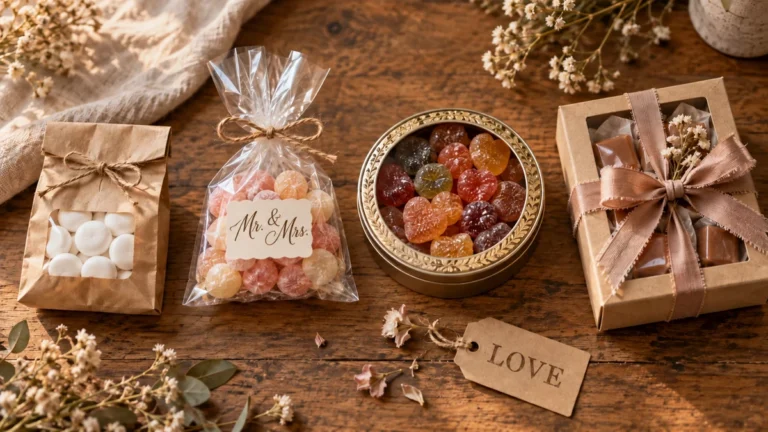
Candy Buffet Wedding Favor Ideas
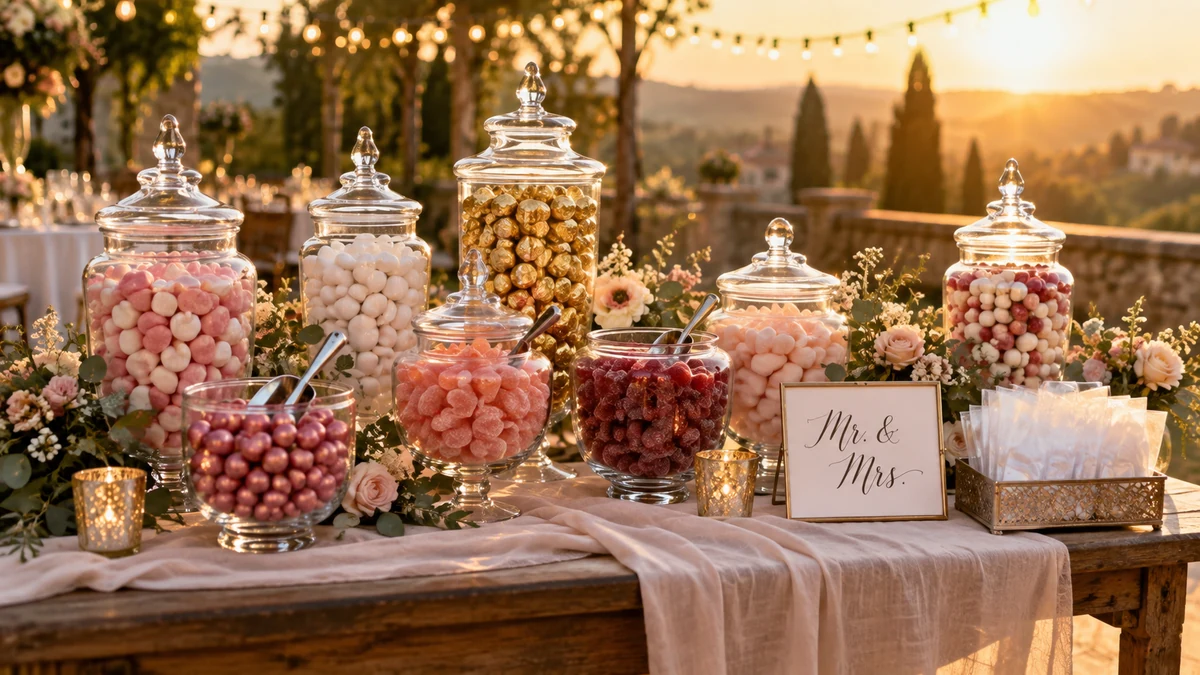
Want to turn your wedding reception into a party? Treat your guests to a candy buffet. It does something an individually wrapped favor can’t. It turns the favor into part of the party instead of something people put in their pocket on the way out.
That’s also why it’s trickier to plan than just some favor bags. A candy buffet is a part of the wedding design. It’s part food, part display, and part logistics. It needs its own quantities, containers, labels, and traffic plan, not just a bigger order of whatever candy you already bought.
A candy buffet can look like a thoughtful part of your reception, or it can look like a bowl of loose candy someone forgot to put away. The difference is in the setup.
This guide covers choosing your candy mix, how much to buy, containers and display, favor bags and labels so guests can take some home, hygiene and allergen basics for a self-serve spread, and the traffic-flow and timing details that keep the table from becoming a bottleneck. For the full range of candy formats and styles beyond the buffet format, see the Candy Wedding Favors guide.
Is a Candy Buffet Right for Your Wedding?
A candy buffet earns its space when a few things line up. It works best with a reception that has a lounge-style stretch of time, cocktail hour, dancing, a late-night window, where guests actually walk past a table more than once. It also needs a little physical space that isn’t already doing another job, and a wedding style that welcomes a colorful, slightly playful display rather than a strictly formal one.
It works less well at a very tight venue with no spare table space, an extremely formal black-tie affair where a colorful candy spread would clash with the room, or a guest list so small that an individual favor at each place setting already covers the moment better.
Quick gut check: If you’re already picturing where the table would go and who would refill it, a candy buffet is probably right for your wedding. If you’re struggling to answer either question, an individual favor may serve you better.
Choosing Your Candy Mix
The candy itself matters less than how it’s chosen. A mix that looks intentional almost always follows one simple rule. Pick a color story or a theme, then choose candy that fits it, instead of buying whatever looks good at the store and hoping it comes together.
Color-coordinated mix: choose two to four colors that match your wedding palette, then fill in with candy in those shades. This is the single most effective way to make a buffet look styled rather than random.
Texture variety: mix hard candy, chewy candy, and something chocolate so the table has visual and textural range, not just twelve versions of the same gummy.
Nostalgia mix: lean on candy your guests grew up with. This works especially well for a multi-generational guest list, since it gives older and younger guests something equally familiar to reach for.
Seasonal mix: let the season inform a few choices, warm spice tones in fall, pastels in spring, so the buffet feels tied to the actual day instead of generic.
Don’t over-diversify: more than six or seven candy types starts to look cluttered and makes refilling harder. A tighter, well-coordinated mix reads as more intentional than a huge variety.
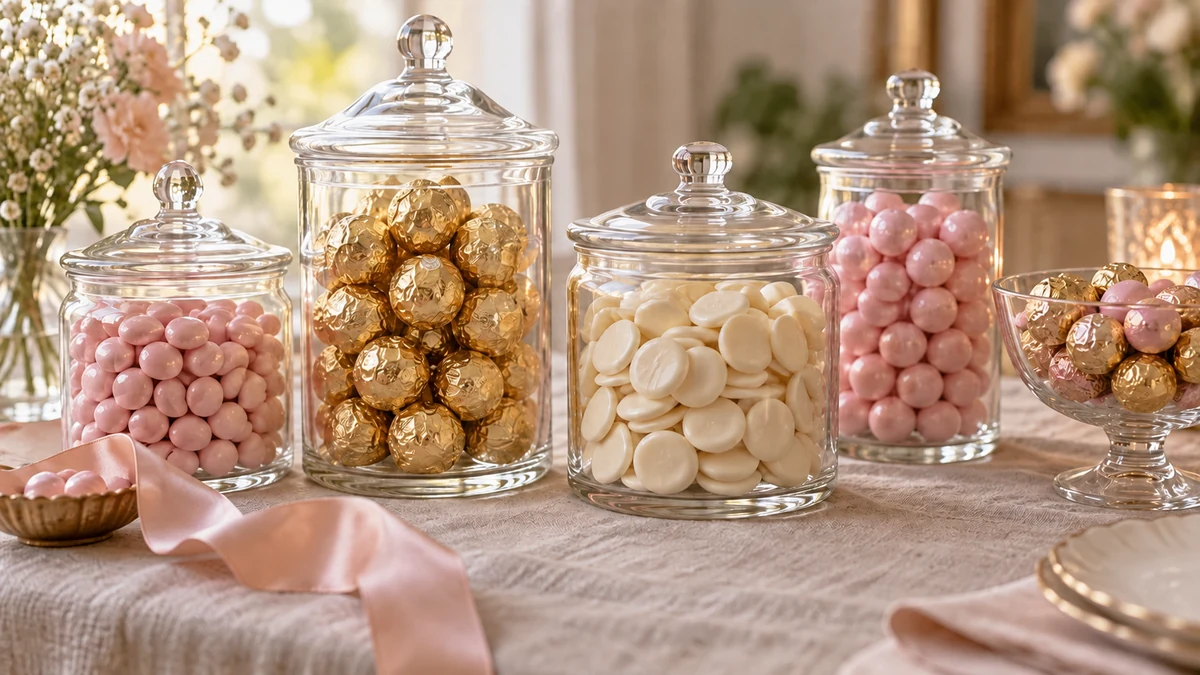
Shop candy by color: Get Personalized Wedding M&M’s. Pastel mixes, metallic and foil-wrapped candy, and seasonal assortments are worth comparing too.
How Much Candy to Buy
Plan on roughly a quarter to a half pound of candy per guest for a buffet that’s mainly a take-home station, and closer to a half to three-quarters of a pound per guest if the buffet is also functioning as a dessert table people will snack from during the reception itself.
A few things push that number up, a longer reception, a buffet placed somewhere with heavy foot traffic like near the bar or the dance floor exit, and a guest list that skews younger. A few things let you plan lighter, a short cocktail-hour-only window, a buffet that’s clearly secondary to a full dessert table, or favor bags that are pre-portioned rather than filled by guests themselves.
Buy a little more than the math says. A buffet that looks half-empty by the middle of the reception reads as under-planned, even if the quantity was technically correct. A slight overage keeps the display looking full the whole night.
Containers and Display
The containers do as much visual work as the candy itself. Apothecary jars, footed candy dishes, and tiered stands at varying heights keep the table from looking flat, and a little repetition, matching jar shapes or a consistent label style, ties a mixed candy selection together visually.
Good container choices: glass apothecary jars in a few sizes, footed compotes, tiered stands, and clear acrylic bins for higher-volume bulk candy.
Display height and layout: vary jar heights so the table has visual rhythm, keep the most popular candy toward the front where guests can reach it easily, and leave enough space between containers that the table doesn’t feel crowded.
Signage: a small sign with the couple’s names or a simple line like “sweet treats to take home” gives the table a clear purpose and photographs well.
Shop containers and display supplies: Get Acrylic Apothecary Jars. Footed candy dishes, tiered stands, clear acrylic bins, and table signs round out the display.
Favor Bags, Scoops, and Labels for Takeaway
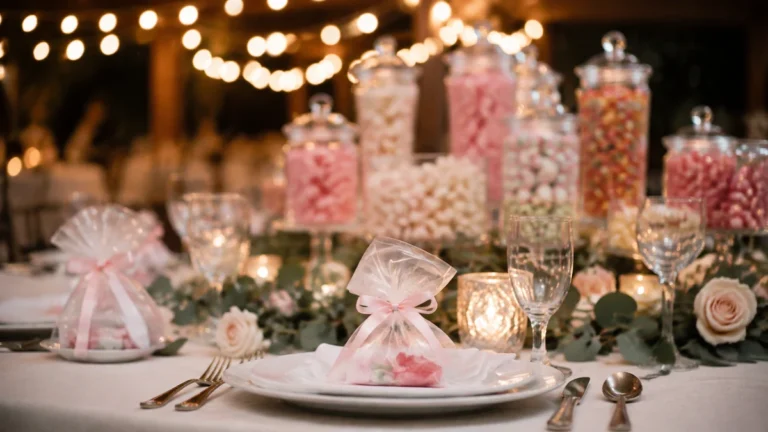
The favor part of a candy buffet lives in the bag, not the jar. Set out small bags or boxes near the table and a short sign explaining they’re for taking candy home, or guests may assume the display is just for the reception and leave without taking anything.
Bag and box options: cellophane bags, small kraft boxes, and personalized mini bags with the couple’s names or wedding date printed on them.
Scoops matter more than people expect. One scoop per candy type keeps flavors from mixing in the jar and speeds up the line. Small tongs work well for wrapped candy, and a scoop works better for loose or unwrapped pieces.
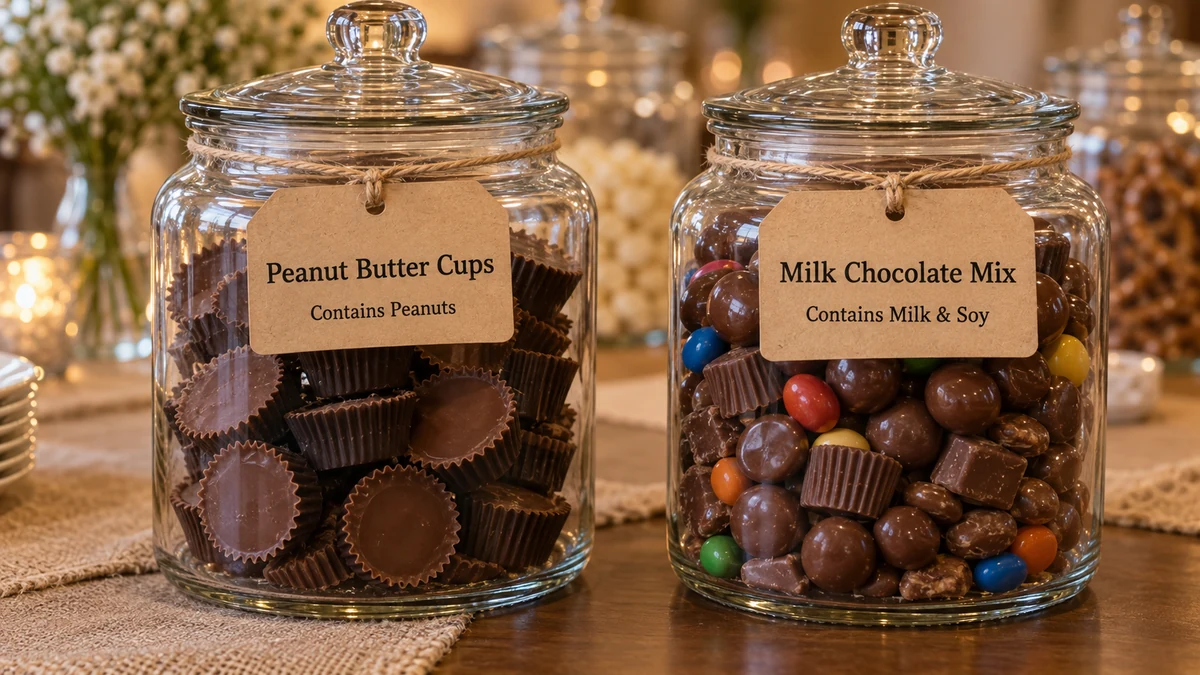
Labels: a small tag naming the candy and calling out any of the major allergens it contains gives guests the confidence to actually take some, especially anyone managing a food allergy or feeding kids from the table.
Shop favor bags and labels: Get Favor Bags and Stickers. Personalized mini bags, kraft favor boxes, custom candy labels, and small scoops and tongs finish the setup.
Hygiene and Food Safety at a Self-Serve Buffet
A self-serve candy display is generally low-risk since most candy is shelf-stable and individually contained, but a few habits keep it genuinely clean for a few hundred hands over several hours.
One scoop or tongs per container. Washington State University Extension’s guidance on buffet food safety is blunt about this. Use the utensil provided for each specific item, and never let one scoop cross into another container. It’s the single easiest habit to lose track of once a buffet gets busy.
Refill, don’t top off. Add a fresh layer to an emptying jar rather than dumping new candy on top of what’s already been handled, especially for anything unwrapped.
Mind the venue’s climate. Chocolate and anything with a soft filling can soften or melt in a warm room over several hours. Save temperature-sensitive candy for cooler venues or shorter display windows, and lean on hard candy, wrapped mints, and gummies everywhere else.
Outdoor or un-air-conditioned venue? Set the buffet in the shade if possible, and plan to swap in a fresh batch partway through the reception rather than leaving one load out for the whole event.
Allergen Considerations for a Candy Buffet
A shared, self-serve display raises the stakes on allergen clarity a little compared to a sealed individual favor, since guests are choosing candy without a package label in front of them. The FDA recognizes nine major food allergens: milk, eggs, fish, crustacean shellfish, tree nuts, peanuts, wheat, soybeans, and sesame. Milk, tree nuts, peanuts, wheat, soy, and sesame are the ones most likely to show up in a candy mix.
Label each container with the candy name and flag any of those allergens it contains. Where possible, group nut-containing candy together and away from the rest of the display, so a guest managing a nut allergy can avoid an entire section rather than reading every jar individually.
Easy win: keep at least one or two jars nut-free and clearly marked. It gives every guest, and every parent filling a bag for a kid, an easy, obvious safe option.
Where to Put the Buffet
Placement decides whether the table flows or backs up. Good spots include near the entrance to cocktail hour, along a wall with clear space on both sides, or near the exit as a parting favor station. Avoid placing it directly in front of the bar, the restrooms, or the only path to the dance floor, since a candy buffet naturally slows people down and creates a pinch point anywhere foot traffic is already heavy.
Leave enough width in front of the table for two or three guests to browse at once without blocking the walkway behind them.
Setup Timeline and Who Refills It
Set the buffet up during the same window as other reception decor, typically an hour or so before guests arrive, so jars have time to settle and any signage is level and readable before anyone’s taking photos.
Assign refilling to a specific person, a coordinator, a member of the venue staff, or a willing family member, rather than leaving it to whoever happens to notice a jar running low. Bring backup candy in sealed containers so a refill takes a minute, not a trip to a store.
Build in a buffer. Plan for one refill check around the midpoint of the reception. A table that looks fresh at hour three feels far more intentional than one that’s visibly picked-over.
What to Do with Leftover Candy
Plan for leftovers before the day arrives, not after. Options include sending extra candy home with the couple, boxing it up for the wedding party, donating unopened bulk candy to a shelter or school, or simply asking the venue or catering staff to package it up at the end of the night so it doesn’t just get tossed during teardown.
Decide this in advance. Leftover candy is an easy thing to forget in the chaos of teardown. Naming one person responsible for it ahead of time means it actually happens.
Candy Buffet Mistakes to Avoid
- Skipping favor bags. Without bags or a clear sign, guests may not realize the candy is meant to go home with them.
- Too many candy types. A cluttered, over-varied mix looks messier than a tighter, coordinated one.
- No plan for refills. A picked-over table late in the reception undoes a lot of the good first impression.
- Ignoring the venue’s temperature. Melted chocolate in a warm room is one of the most avoidable candy buffet failures.
- Placing it in a traffic bottleneck. A buffet in front of the bar or the only path to the dance floor slows everyone down.
- Skipping allergen labels. Guests deserve to know what they’re picking up, especially in a shared display.
- No plan for leftovers. Deciding this in advance avoids a chaotic, wasteful end to the night.

Frequently Asked Questions
How much candy do I need for a wedding candy buffet?
Plan roughly a quarter to a half pound per guest for a take-home-focused buffet, and a half to three-quarters of a pound per guest if it’s also serving as a dessert table during the reception.
What candy works best for a candy buffet?
A coordinated mix of two to four colors, with a variety of textures, hard candy, chewy candy, and something chocolate, reads as more intentional than a huge assortment of everything available.
Do I need favor bags at a candy buffet?
Yes. Without bags or boxes and a small sign explaining they’re for taking candy home, many guests will assume the display is reception decor rather than a favor.
Is a candy buffet food-safe for a large group?
Yes, with basic precautions. Use one scoop or set of tongs per container, refill rather than topping off, and keep heat-sensitive candy out of warm spots or direct sun.
How do I handle allergies at a candy buffet?
Label each container with the candy name and any major allergens it contains, and keep at least one or two nut-free jars clearly marked so every guest has an easy, obvious safe option.
Where should I place the candy buffet at my reception?
Near the cocktail hour entrance, along a wall with space on both sides, or near the exit works well. Avoid the area right in front of the bar or the only path to the dance floor.
What happens to leftover candy?
Decide in advance. Common options are sending it home with the couple, boxing it for the wedding party, or donating unopened bulk candy. Assign one person to handle it so it isn’t forgotten during teardown.
Keep Planning
For the full range of candy formats, styles, and budgets beyond the buffet format, the Candy Wedding Favors guide covers everything from individual favors to seasonal picks and packaging ideas. To compare specific picks by price, see Best Candy Wedding Favors for Every Budget.
Build a Candy Buffet Guests Actually Use
Pick a color story, plan the quantities, and give guests a bag to fill. That’s the whole formula for a candy buffet that looks intentional and gets emptied by the end of the night.